


How to Take Care of Your Clothes
How to Care for Your Clothes
We are dressmakers.
And, just a little bit, knitters too.
In our collections, we create combinations of garments sewn and knitted in Lithuania.
We care about the quality of our pieces far more than quantity.
Does it ever happen that we think, “We did everything we could… and somehow it still happened?”
Of course.
But hand on heart—we are constantly thinking about how to create something that is not only beautiful but also long-lasting.
And lately, the feedback that has been making us smile the most is:
“I have truly loved this piece for several years, and somehow I still cannot stop loving it.”
Those words lift us higher than the bluest sky.
Because one thing is certain: we have no desire to create garments that wear out quickly, only for you to need something new next season.
We create.
We care.
We test.
And we follow one very important rule:
We design as if we were making every piece for ourselves.
We want our clothes to ask nothing unreasonable from you—not while wearing them, and not while caring for them.
But this is where I need to stop for a moment.
Because the word “care” should never be forgotten.
Just as we look after our skin, hair, and nails—not simply enjoying that we have them, but actively caring for and nurturing them—our “second skin”, our clothes, deserve the same attention.
In the upcoming collection, we will once again introduce many new wardrobe favourites.
And if you want them to bring you the same joy and beauty as the day you first brought them home, remember these simple rules that can work true magic.
1. Merino wool loves gentle washing.
In our Autumn-Winter 24|25 collection, we have included five pieces made from 100% merino wool.
We adore their exceptional quality, lightweight feel, softness against the skin, and incredible warmth.
But even if someone woke us in the middle of the night, we should remember:
MERINO WOOL SHOULD BE WASHED AT NO MORE THAN 30°C ON THE WOOL SETTING.
Otherwise, heartbreak may follow.
A little advice: don’t trust the misleading thought, “I’ll just wash it by hand.”
30°C is cooler than many people imagine, and checking the temperature with your hand can easily lead you astray.
A 30°C wool cycle in your washing machine = many happy years with your merino pieces.
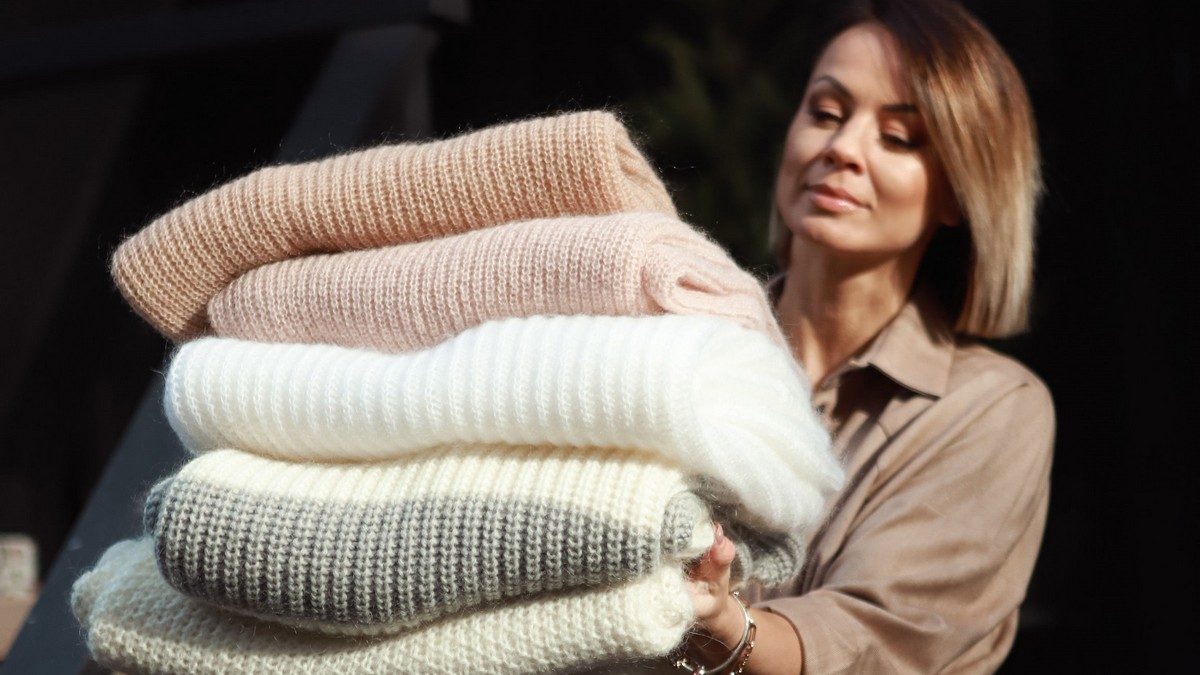
2. Knitwear and jersey pieces prefer NOT to live on hangers.
If you want your knitted garments to keep their beautiful “just purchased” shape for as long as possible, fold them gently and store them in a drawer or on a shelf.
I personally break this rule because I love oversized pieces and often choose sweaters larger than my measurements would suggest—so my knitwear does hang in my wardrobe.
3. Mohair creates the cloud-like magic.
Many of our knitted pieces include mohair yarn.
It is exactly what gives a sweater that feeling of being soft, fluffy, and light as a cloud.
But!
Mohair knitwear can sometimes leave little fibres behind and transfer fluff onto other garments.
We spent a long time wondering whether this “chronic little problem” could be solved.
Unfortunately, after consulting several knitting specialists and trying to remove mohair from our designs, we were left with heavy, flat pieces that had lost their magic.
And we decided that we simply cannot give up that cloud-like softness.
Our advice?
If your knitted piece—a scarf or sweater—leaves some fibres behind, take it outside and shake it firmly.
All our knitted pieces go through a finishing process after production: they are washed and shaken. But sometimes not every loose fibre disappears at once.
4. Quality yarns and carefully chosen fabrics still need attention.
We knit with high-quality yarns and sew with carefully tested fabrics.
Our garments are usually not prone to pilling.
But even the most reliable pieces can show signs of wear in areas where friction happens:
where a car seatbelt rubs,
where bracelets move against sleeves,
where necklaces touch collars,
where a handbag rests against the side of your body.
Our advice?
Keep an electric fabric shaver nearby.
After washing, hold your garment up to the light and check the areas that experience the most friction. If you notice the first small “symptoms” of pilling, remove them.
Usually, one simple removal of the loose fibres is enough to prevent the issue from returning.
5. Wash garments separately.
Even though washing only when you have a full load of laundry is more environmentally efficient, protecting the longevity and beautiful appearance of your clothes sometimes requires a different approach.
Wash your garments separately.
If you wore suit trousers and a matching shirt during the day, don’t simply throw them into the general laundry pile when you come home.
Don’t skip this step.
A gentle wash programme doesn’t take long, and washing garments made from the same fabric separately—without other items rubbing against them—is truly a ticket to a longer relationship with your clothes.
6. Jackets and quilted vests.
According to traditional outerwear care recommendations, jackets and quilted vests are usually marked with a dry-cleaning symbol.
But after years of carefully selecting and testing our lining, outer fabrics, and materials, we quietly admit:
We wash our own jackets, vests, and coats at home.
Using the gentle hand-wash setting in the washing machine.
7. But not everything belongs in the washing machine.
The previous rule is wonderful—but it absolutely does not apply to our beautiful Once in England 100% wool blazer, skirt, and caramel coat.
These pieces must be cared for according to the instructions on their care labels.
P.S. They are actually very resistant to dirt, so there is no need to fear frequent visits to the dry cleaner.
8. Choose fabrics that make life easier.
Over many years, we have carefully selected fabrics—including suiting materials—that do not immediately demand an appointment with an iron after washing.
We have followed the same principle in this collection.
Wash garments separately, and as soon as the washing machine finishes, hang the garment on a hanger to dry.
Most pieces will be dry and ready to go by morning.
But if ironing is needed, choose a steam iron whenever possible.
9. White shirts need special care.
In our Autumn-Winter 24|25 collection, you will once again meet our white-collar favourites—shirts.
And once again, we have made sure they are the kind that do not require ironing.
To keep them beautifully white for as long as possible, always wash them separately.
As long as you follow this simple rule, unwanted greying, yellowing, or colour changes will not become a problem.
10. Always check pockets and the washing machine drum.
Forgotten hair clips, coins, or sharp objects hiding in pockets can cause irreversible damage—especially to delicate fabrics and knitwear.
11. Protect your wardrobe from direct sunlight.
Even though sunlight may seem harmless and gentle, its invisible fingers can slowly fade fabric surfaces.
And unfortunately, this damage cannot be undone.
V.