

For such an evening
Every year at the same time.
We go “visiting.”
I pick the most beautiful white flowers and press them into my gloved hand.
My husband carries the “gifts.”
The kids, with their thickest hats and gloves, trudge along together.
“To Grandma and Grandpa,” they chime.
At “their place,” there’s no table.
No chairs.
No one offers you to take off your coat.
No need to remove your shoes.
But every year, lined up in a row among the countless twinkling candles… I close my eyes for a moment.
…And I see her pulling her baked “babka” from the oven, what she called her signature cake, which she served every Sunday. Sometimes the “babka” would collapse, and Grandma would worry and sigh, saying, “Well, you didn’t turn out right.” But we, the children, never noticed and devoured it without sensing any deviation from the usual “deliciousness” standard.
I always smile in my mind remembering Grandma’s signature dinner dish—“KAPLŪNAS,” which she ceremoniously always offered to us. Do you know what a “kaplūnas” is?
No?
Water, into which you tear a slice of black bread and sprinkle a spoon of sugar.
And then?
Eat!
You cringe? You can’t imagine how delicious it was as a child.
I remember her upstairs bedroom, where climbing the wooden stairs felt like entering a fairy tale paradise. Snuggling under the “kaldra,” into bed, your feet would warm, and the stories about Elenytė would begin.
I remember when I brought a new doll, Grandma would pull out a large basket of fabric scraps from under the table and let me choose the fabric for the doll’s dress. Then she would adjust her glasses perched on her nose and patiently thread the needle. After a few turns of the old, oiled sewing machine wheel, she would hand me the new garment for “fitting.”
I remember her long white braid, which she twisted every morning and pinned into a bun with metal pins. Then she covered her head with a scarf.
I close my eyes and see Grandma’s scarf drawer, which she let me explore, and though “newcomers” rarely appeared in that drawer, I always lifted them with awe and great care, knowing they were her most precious treasures.
I open my eyes.
I “breathe in” the feeling of the twinkling candles and close my eyes again.
I see Grandpa.
For some reason, in memories, he is most often wearing a cherry-colored sweater, leaning over the newspaper he just brought.
He never missed a chance to read aloud a joke found at the end of the newspaper. Or to retell it in his own way.
I remember climbing onto his lap, and he would start “kicking” us, his grandchildren, singing: “One up, one down, Viktariukas red.” And we would giggle until our cheeks were the color of winter apples.
I remember his workshop.
And the “business” he invented. On weekdays, he made “muštaukes” (wooden tools for whipping butter), and on weekends, placing them into baskets sewn by Grandma, he would take them to the market to sell.
Mostly, he didn’t sell them.
But he always came back in good spirits.
“I’ve talked to so many people,” he would rejoice in his immaterial “profit.”
I remember how he loved candy.
And most often, in his mouth, “bambonkė,” a type of raisin candy, would “nap.”
I remember Grandma scolding him that so much sweetness wasn’t healthy, and then adding: “Oh well, maybe it won’t harm us anymore.”
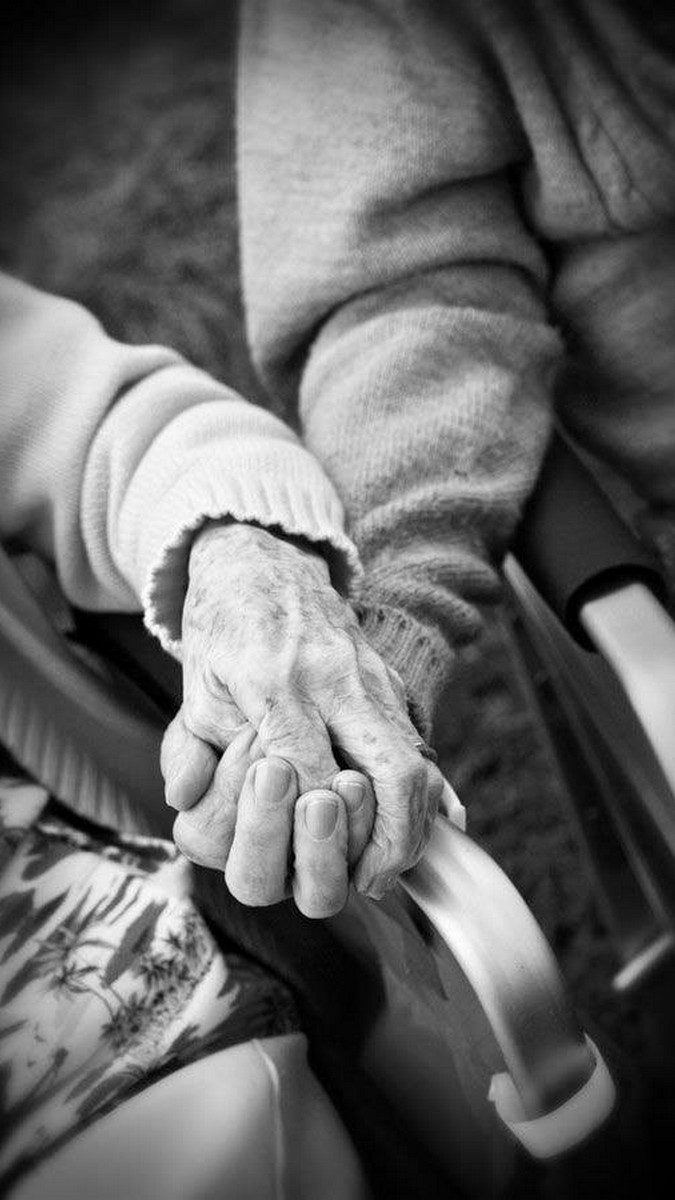
I remember how they loved each other.
And they always argued in the best spirit: “Who will die first?”
“Choose,” Grandpa would say, nudging Grandma, “Morning or evening?”
“Morning,” she would answer.
“Then evening is mine,” Grandpa would chuckle. And, with a serious face, add:
“So what will I do without you all day? No one to argue with…”
Every year.
The same evening.
Visiting “their place.”
At Grandma and Grandpa’s.
I return physically cold but spiritually warmed, remembering how they loved life, each other, and us.
Walking along the candle-lit path, I tell the children:
“Grandma and Grandpa have gone. To heaven.”
And in my mind, I add:
Not forever.
They come back every year.
In memories.
Spend today cozily with those who haven’t gone anywhere.
And with the memories that have returned.
After all, such an evening, lit by little flames, lingers in the air.
V.